The Unwritten Rules of the Google Pay Referral Program (And How to Actually Get Paid)
The promise is simple and incredibly tempting: Refer a friend to Google Pay and earn ₹201! It sounds like the easiest money you'll ever make. You share your link, your friend makes one small payment, and you both get a cash reward.
But as countless frustrated users across Reddit and other forums have discovered, turning that promise into actual cash can be a surprisingly tricky game. You follow all the steps, your friend uses a fresh number... and then, nothing. The reward never comes.
This isn't just bad luck; it's a system with a complex web of unwritten rules and hidden tripwires. This is your definitive, no-nonsense guide to the Google Pay referral program. We'll walk you through the official playbook, expose the hidden traps that cause most referrals to fail, and give you a step-by-step troubleshooting plan.
While the GPay program is powerful, it's just one of many. We tested over 15 of India's top apps to find the real winners. To see how GPay stacks up against the competition, check out our comprehensive guide to the Best Refer & Earn Apps in India.
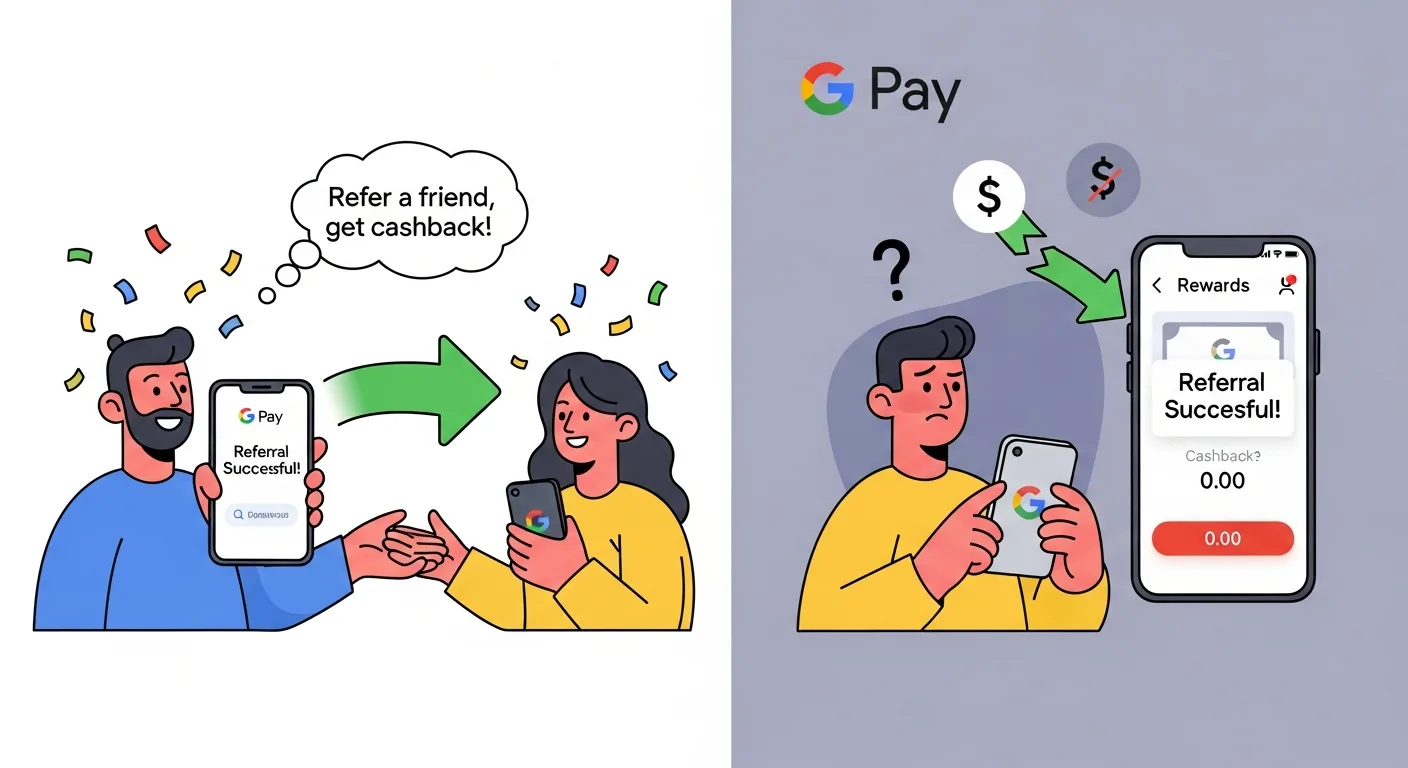
The Hidden Traps: 4 Reasons Your Referral Failed
This is where most people get stuck. The official rules are simple, but the system's eligibility checks are incredibly strict. Here are the real reasons you're not getting paid.
1. The "Pristine Device" Rule (The #1 Killer)
You think a "new user" means a new phone number. Wrong. Google checks the device itself. If GPay has ever been installed on that specific phone before-even with a different number or Google account-the referral is disqualified. This includes factory-reset second-hand phones.
2. The First Payment Pitfalls
The "first payment" must be an eligible one. Sending money to a non-GPay UPI ID, paying for insurance, or not paying within 28 days often won't count. The safest bet is a simple ₹1 transfer to another existing GPay user.
3. The Referral Code Hijack
If your friend has clicked someone else's affiliate link in the past, that code might be "stuck" in their browser. If they don't use your specific link at the exact moment of download, the credit goes to someone else.
4. The Fine Print "Gotchas"
There are hard limits: a max of ₹9,000 in earnings per financial year, and the offer is not available in Tamil Nadu.
The Official Playbook: How It's Supposed to Work
For You (The Referrer)
- Open GPay, scroll down, and tap "Invite".
- Share your unique referral link with a friend.
For Your Friend (The Referee)
- They MUST click your link to download the app.
- They sign up and link a bank account.
- They make their first-ever eligible payment.
- You both receive the cashback reward.
Troubleshooting: What to Do When You Don't Get Paid
| Step | Action |
|---|---|
| 1. The Audit | Honestly review the "Hidden Traps" above. Was the device truly pristine? Did they use your link? This is the cause 99% of the time. |
| 2. Check Rewards | Go to GPay > Promotions > "Rewards" and look for a pending or locked scratch card. |
| 3. The Waiting Game | Wait at least 7 business days. Rewards are not always instant. |
| 4. Contact Support | As a last resort, contact GPay support via the app, but be prepared for a frustrating experience as many users report their claims are denied. |
The Final Verdict: Is It Worth It?
Yes, but only if you are ruthless. The only way to almost guarantee success is to personally guide your friend through the process. Sit with them, ensure they are using a "pristine device," have them click your link, and watch them make their first payment. It turns a "passive" task into an active one, but it's the surest way to beat the system.
Ready to Try It the Right Way?
Now that you know the unwritten rules, you can use the Google Pay referral program effectively. If you haven't signed up yet, or are helping a friend, you can use my personal referral link below.
Disclosure: This is my personal referral link. If you use it and complete the steps correctly, we may both receive a cash reward from Google at no cost to you. It's a great way to support our independent research.